

ALOPECIA AREATA
What is alopecia areata?

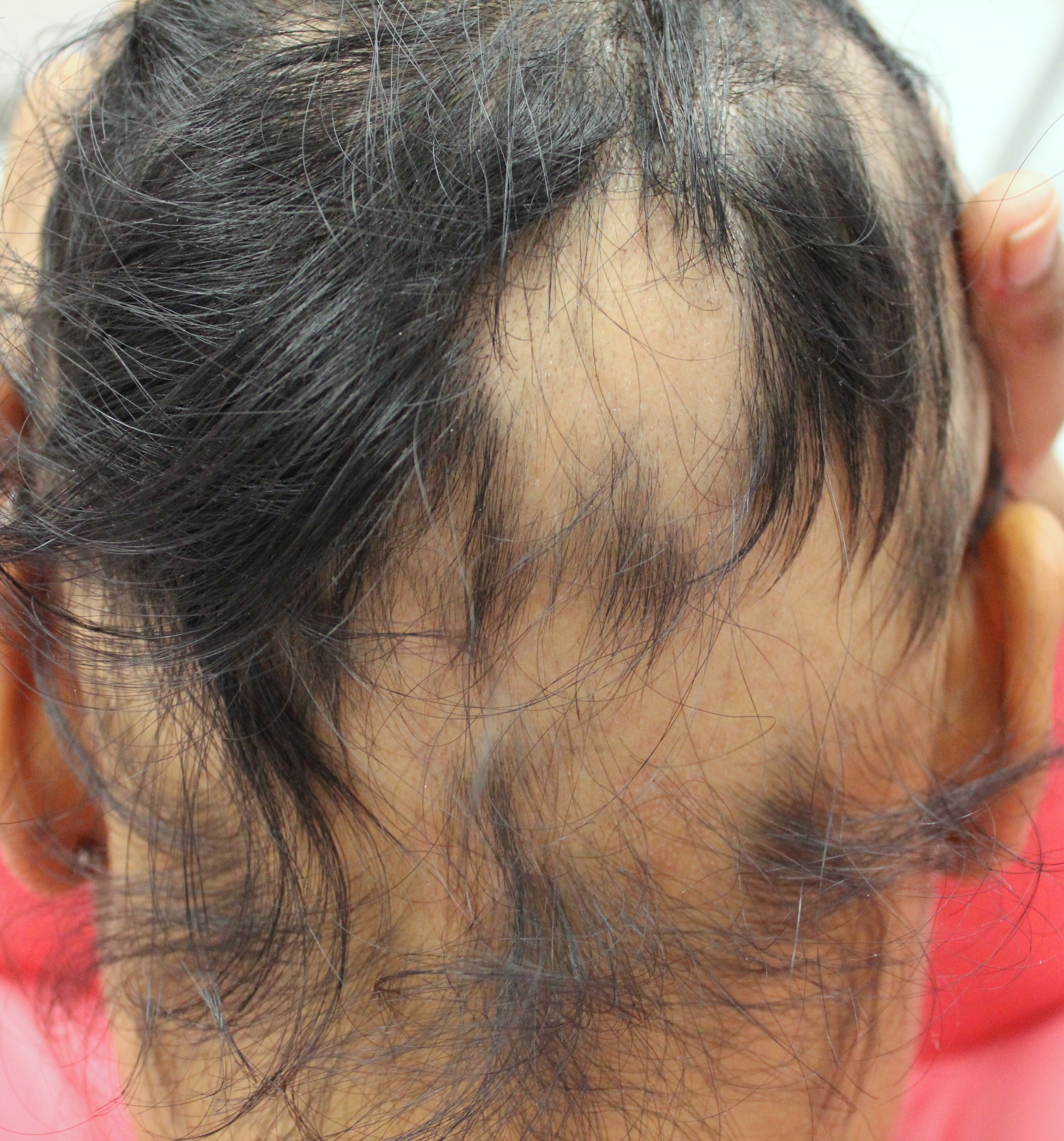
- Alopecia areata is an autoimmune condition that affects about 2 % of the world’s population.
- 50 % of those who develop alopecia areata will experience hair loss before the age of 20. Therefore, alopecia areata is frequently starts in childhood and adolescence.
- The condition is classified as an autoimmune condition, meaning that the body’s own immune system is attacking the hairs.
- The precise cause of alopecia areata is unknown.
What are the different types of alopecia areata?
- The vast majority of individuals with alopecia areata develop a limited number of patches (circular areas of hair loss) on the scalp. This is known as patchy alopecia areata.
- Alopecia totalis refers to loss of all scalp hair.
- Alopecia universalis refers to loss of scalp hair as well as all body hair.
- Ophiasis refers to a form of alopecia where individuals lose hair at the back of the scalp
Is a biopsy needed to diagnose alopecia areata?
No, in most cases a biopsy is not needed. There are some rare forms of alopecia areata that can be difficult to diagnosis and require a biopsy.
What are the treatments for alopecia areata?
Treatments help some patients to regrow hair.
a) If patients have small areas of hair loss, treatments include:
b) If patients have more extensive areas of hair loss, treatments include:
Hair loss can occur again in the future.