

PSEUDOPELADE OF BROCQ
What is pseudopelade?

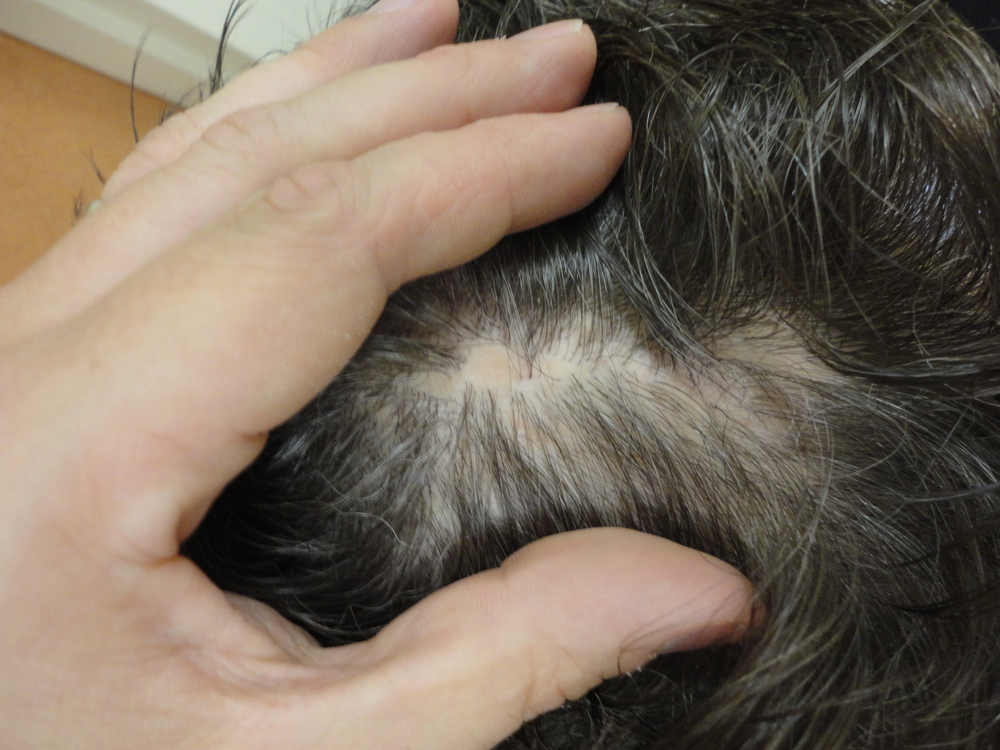
- This is a type of scarring hair loss condition.
- The hair loss in the bald areas is permanent
Who gets pseudopelade?
- Both men and women can develop pseudopelade, although it is 3 times more common in women
How does the doctor arrive at the diagnosis of pseudopelade?

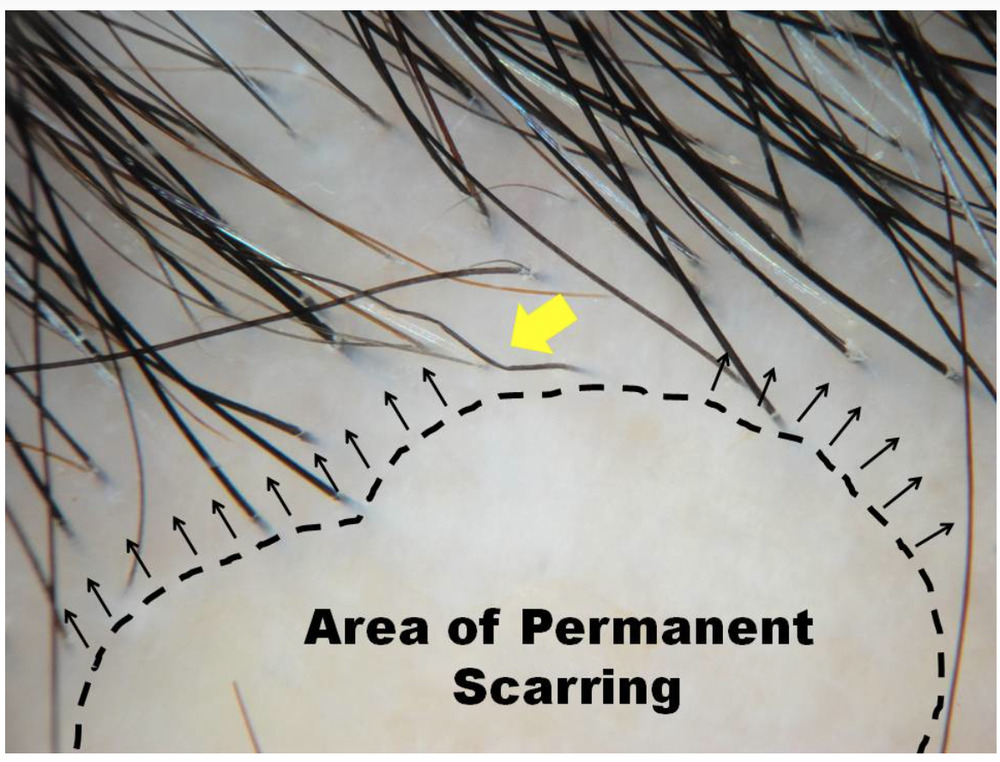
- Several features lead to this diagnosis, including areas of scarring hair loss, rarely redness around the hair follicles, depression of the skin, and findings on the biopsy showed very little inflammation, loss of the fat glands and scarring
How is pseudopelade treated?
- Pseudopelade is challenging to treat. Even with treatment, some cases to spread, albeit very slowly
- The goal of treatment is to stop the disease.
- Hair regrowth in the bald areas is not possible in most cases.
- Even with treatment, some hair loss can still occur, albeit very slowly.
MAIN TREATMENTS:
- Pills may be used such as Doxycycline, Plaquenil, Mycophenolate mofetil
- Injection of steroids into the affected areas of the scalp may be advised
- Use of topical medicines you apply yourself at home may also be advised (Clobetasol, Tacrolimus (Protopic)
- Sometimes, hair transplantation can be performed if the disease become "quiet"
How long will I be on these treatments?
- Your disease will be carefully monitored by your doctor
- If the disease does not appear to be spreading, the doses of medications will be reduced and possibly stopped.
- However, if there is any evidence the disease is increasing, increased doses or even new medications may be prescribed.
- This is a type of scarring hair loss condition.
- The hair loss in the bald areas is permanent
Who gets pseudopelade?
- Both men and women can develop pseudopelade, although it is 3 times more common in women
How does the doctor arrive at the diagnosis of pseudopelade?
- Several features lead to this diagnosis, including areas of scarring hair loss, rarely redness around the hair follicles, depression of the skin, and findings on the biopsy showed very little inflammation, loss of the fat glands and scarring
How is pseudopelade treated?
- Pseudopelade is challenging to treat. Even with treatment, some cases to spread, albeit very slowly
- The goal of treatment is to stop the disease.
- Hair regrowth in the bald areas is not possible in most cases.
- Even with treatment, some hair loss can still occur, albeit very slowly.
MAIN TREATMENTS:
- Pills may be used such as Doxycycline, Plaquenil, Mycophenolate mofetil
- Injection of steroids into the affected areas of the scalp may be advised
- Use of topical medicines you apply yourself at home may also be advised (Clobetasol, Tacrolimus (Protopic)
- Sometimes, hair transplantation can be performed if the disease become "quiet"
How long will I be on these treatments?
- Your disease will be carefully monitored by your doctor
- If the disease does not appear to be spreading, the doses of medications will be reduced and possibly stopped.
- However, if there is any evidence the disease is increasing, increased doses or even new medications may be prescribed.